Australia's Solar Opportunity
Australia has more rooftop solar per capita than almost any other country on earth. With over 3.7 million households now sporting panels, it's clearly working for a lot of people. But the financials vary enormously depending on your state, energy usage, roof orientation, and the deal you signed with your installer.
Before you commit to a $7,000–$15,000 installation, it's worth doing the maths properly. Use our Solar Savings Calculator to model your specific situation.
What Does a Solar System Cost in 2026?
System prices have fallen dramatically over the past decade and have broadly stabilised. Typical installed costs as of 2026:
- 6.6kW system (most popular): $7,000–$9,500 after the federal STC rebate
- 10kW system: $9,500–$13,000 after rebate
- 13kW system: $11,000–$15,000 after rebate
The federal government's Small-scale Technology Certificates (STCs) scheme effectively provides an upfront discount that averages $2,000–$4,000 depending on system size and your location. Installers typically apply this automatically to reduce the quoted price.
How the Savings Stack Up
Solar saves you money in two ways: reducing how much grid electricity you buy, and earning feed-in tariff credits for excess power you export. Here's a realistic breakdown for a typical 6.6kW system in a sunny Australian climate:
| Scenario | Annual Saving |
|---|---|
| High self-consumption (home during day) | $1,800–$2,400 |
| Average household (work away from home) | $1,200–$1,700 |
| Low self-consumption (all day away) | $700–$1,100 |
Self-consumption is the key variable. Solar power you use directly is worth the full retail electricity rate you avoid paying (around 30–38 cents/kWh in most states). Solar power you export only earns the feed-in tariff, which has dropped dramatically — most retailers now pay just 4–10 cents/kWh for exports.
Feed-In Tariffs: The Fine Print
The golden era of feed-in tariffs (some states paid 44–60c/kWh a decade ago) is long gone. Today's rates by state:
- NSW: 4–10c/kWh (market-based, retailer-dependent)
- VIC: Minimum 4.9c/kWh guaranteed; some offers up to 10c
- QLD: 6–12c/kWh depending on retailer
- SA: 5–10c/kWh, market-based
- WA: Synergy pays 2.25c/kWh for Distributed Energy Buyback Scheme
These low rates mean the economics favour using your solar power yourself rather than exporting it. Running appliances during the day — dishwasher, washing machine, EV charging — dramatically improves your return.
The Payback Period Calculation
Payback period = Total System Cost ÷ Annual Saving
Example: $8,500 system, $1,500 annual saving = 5.7 year payback. Given panels typically have a 25-year performance warranty and inverters last 10–15 years, that leaves a long tail of pure savings. Use our Solar Savings Calculator to run this for your own numbers, or check your current Energy Bill Calculator to understand your baseline usage.
Battery Storage: Is It Worth Adding?
Home batteries (like the Tesla Powerwall or Sonnen battery) let you store excess solar for evening use. They're genuinely useful — but expensive. A 10kWh battery system adds $10,000–$15,000 to the bill, with a payback period of 12–18 years in most cases. Unless you're in an area with frequent outages or very high time-of-use tariffs, batteries are not yet financially compelling for most Australian households without government incentives. Check your state government's website for battery rebate programs — Victoria and South Australia have run substantial schemes.
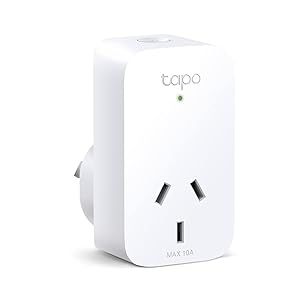
You can also pick up smart power monitoring plugs on Amazon AU to track exactly which appliances are using the most energy before deciding on solar or battery size.
The Verdict
Solar panels are worth it for most Australian homeowners who own their property, have a reasonable power bill (over $150/quarter), and can use a decent chunk of the solar power they generate during the day. The payback period of 4–8 years looks excellent against a 25-year panel warranty.
They're a harder sell if you're renting, export most of your power, or have a north-facing roof obstruction. Run your numbers honestly — our Solar Savings Calculator makes it straightforward.
Real Example: How a Brisbane Family Recouped $8,200 in Five Years
The Nguyen family in Aspley, Brisbane installed a 6.6kW solar system in January 2020 for $7,800 after the STC rebate. Their quarterly electricity bills averaged $520 before solar, driven by aircon use and two teenage kids at home after school.
Here's what happened over their first five years:
- Year 1: $1,640 saved (high self-consumption, kids home for remote learning during COVID)
- Year 2: $1,580 saved (return to normal routine, adjusted usage patterns)
- Year 3: $1,720 saved (electricity prices jumped, making each kWh avoided more valuable)
- Year 4: $1,680 saved (one inverter warranty claim resolved at no cost)
- Year 5: $1,580 saved (consistent performance, no degradation noticed)
Total five-year saving: $8,200. They crossed the payback threshold in late 2024 and now bank roughly $130 per month in avoided costs. Their feed-in tariff with AGL pays 8c/kWh, but they've learned to run the dishwasher, pool pump and washing machine on timers between 10am and 2pm to maximise self-consumption.
The Nguyens made two smart moves: they compared at least four quotes using the Solar Choice platform, and they avoided oversizing the system. A pushy salesman tried to sell them a 10kW system claiming "bigger is always better", but their actual consumption data didn't justify it. The 6.6kW matched their roof space and usage perfectly.
State-Specific Rebates and Schemes You Should Know About
Beyond the federal STC rebate, several states offer additional incentives that can dramatically improve your payback period. These change regularly, so always check your state government energy website before signing a contract.
