

Grow Your Business
Sponsored · Amazon.com.au
Shop Business Books →

Calculators for Small Business

Quick tools to work out GST, sole trader tax, employee wages, and how much that new van or website will really set you back.

Calculators for Small Business

Tax, Payroll, and the Numbers Every Small Business Owner Needs to Know

Most small business owners spend their days doing the actual work, not managing the admin behind it. But getting the fundamentals wrong — GST, super, payroll tax — creates problems that compound fast. Here's a plain-English guide to the key obligations and the calculators to make them easier.

ABN vs Company — which structure is right?

The two most common structures for small business in Australia are sole trader (operating under an ABN, no separate legal entity) and company (a Pty Ltd, separate legal entity with a flat 25% tax rate for base rate entities with turnover under $50 million). Sole trader is simpler and cheaper to set up but exposes your personal assets to business liability. A company provides limited liability protection but adds compliance costs — ASIC fees ($290/year), separate tax lodgements, and payroll obligations even if you're the only worker. Trusts (discretionary and unit) add another layer of flexibility for income splitting but require professional setup and ongoing management. Most small operators start as sole traders and transition to a company when revenue justifies it or liability risk increases. Talk to an accountant before restructuring — the timing has capital gains tax implications.

GST — when you have to register and how it works

You must register for GST if your annual turnover meets or exceeds $75,000 (the GST registration threshold). Once registered, you add 10% GST to your prices and collect it on behalf of the ATO. You also claim back GST you've paid on business expenses (input tax credits). The net GST — what you collected minus what you paid — gets remitted to the ATO via your BAS. Use the GST Calculator to quickly add or strip GST from any figure. Key traps: some supplies are GST-free (fresh food, medical, education) and some are input-taxed (residential rent, financial services) — these have different treatment on your BAS. If in doubt, check the ATO's GST ruling or ask your accountant.

BAS — what you lodge and when

A Business Activity Statement (BAS) reports your GST and PAYG withholding to the ATO. Most small businesses lodge quarterly (April, July, October, January). If your GST turnover is $20 million or more, you lodge monthly. If you're voluntarily registered for GST with turnover under $75K, you can lodge annually. Missing BAS deadlines triggers penalties and interest — the ATO is more lenient with businesses that contact them proactively before deadlines. Use a bookkeeping system (Xero, MYOB, or even well-maintained spreadsheets) to track GST collected and paid throughout the quarter so lodgement isn't a scramble.

Superannuation for your employees — and yourself

If you employ workers (including casuals earning $450+/month — note the threshold was abolished in 2022, so now all casual earnings trigger super obligations regardless of amount), you must pay 11.5% super on their ordinary time earnings by the quarterly due dates. Late payment of super attracts the Superannuation Guarantee Charge (SGC), which is more punitive than the guarantee rate — it also applies to non-payable earnings and includes an admin fee and interest. If you're a sole trader or a shareholder-director of your own company, you are not automatically entitled to receive employer super. Use the Super Guarantee calculator to check obligations and verify you're meeting deadlines.
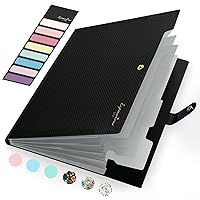
For a practical guide to running a small business in Australia without the jargon, The E-Myth Revisited by Michael E. Gerber is a classic on building a business that runs without you — relevant whether you're a tradie or a consultant.

Common deductions for small business

Australian small businesses can claim a wide range of deductions if the expense is incurred in the course of earning assessable income. High-value ones include: vehicle expenses (logbook method for the work-use portion of car costs, or cents per kilometre for up to 5,000km/year), home office expenses (if you run from home, claim the ATO's fixed rate of $0.70/hour or the actual cost method), marketing and advertising costs, professional subscriptions and memberships, tools and equipment (immediate write-off for assets under $20,000 under the temporary full expensing scheme — check whether it's been extended for the current year), accounting and bookkeeping fees (fully deductible), and bank fees on business accounts. Keep records for five years. If you're paying for anything personally that has a business component, track it.

Single Touch Payroll — what employers need to know

Single Touch Payroll (STP) is mandatory for all employers in Australia regardless of size. Every pay run must be reported to the ATO electronically via your payroll software on or before payday. STP Phase 2 (now required for most businesses) adds more granular reporting including disaggregated income types and country codes for foreign workers. The ATO pre-fills employee tax returns using your STP data, so errors in your payroll affect your employees' tax returns. If you're running payroll manually on spreadsheets, you need to move to STP-compliant software. Xero, MYOB, KeyPay, and Reckon all have STP-compliant payroll modules. The ATO's free solution for micro employers (1–4 employees) is available through several providers.

Division 7A — the trap that catches private company owners

If you run a private company (Pty Ltd) and take money out of it as a loan rather than wages or dividends, Division 7A of the Tax Act can treat that loan as an unfranked dividend — meaning it becomes taxable income in your hands without the benefit of company tax already being paid. This catches a lot of business owners who treat their company account like a personal account. Loans to shareholders or their associates must be documented with a formal loan agreement and repaid with minimum repayments at the ATO's benchmark interest rate (currently 8.27% for 2025). Use the Division 7A calculator to estimate required repayments. Talk to your accountant if you've been drawing from your company without formal dividend declarations.

Your Essential Calculators

$
%

Australian GST is 10%. Change for other countries.

Open full calculator → for more options and detailed breakdown.

Helpful Guides

Guide: How to Set a Profitable Hourly Rate

Most service-based small business owners undercharge because they price their rate against what they'd earn as an employee — which ignores the true cost of being self-employed. Your hourly rate needs to cover: your target take-home pay, self-employed super (you pay your own), tax (estimated quarterly PAYG instalments), business expenses (insurance, software, vehicle, phone), and the fact that not all hours are billable — admin, marketing, and chasing invoices are real time costs. A simple formula: (Annual target income + business expenses + tax provision + super) ÷ billable hours per year. Use the Hourly Rate calculator to work through this. If you're charging $80/hour but 40% of your time is unbillable, your effective rate is $48/hour — before expenses. Most sole traders discover they need to charge 40–60% more than their instinct suggests.

Guide: Understanding Fuel Tax Credits for Business Vehicles

If your business uses fuel in vehicles or equipment, you may be entitled to a fuel tax credit — a refund of part of the excise duty on fuel used in business activities. Light vehicles (under 4.5 tonne GVM) travelling on public roads receive a lower rate (around 17.8 cents/litre for the 2024-25 year). Heavy vehicles, machinery, and off-road use receive the full credit rate (around 48.8 cents/litre). This can add up to thousands of dollars per year for trades businesses, transport operators, farmers, and anyone running equipment. You claim fuel tax credits on your BAS. Use the Fuel Tax Credit calculator to estimate your entitlement based on litres consumed and vehicle type. Keep fuel receipts and logbooks as supporting records for ATO review.

🛒

Small Business Books

Grow your business smarter

Shop on Amazon →

As an Amazon Associate, CalculatorMate earns from qualifying purchases.

Frequently Asked Questions

When do I have to register for GST in Australia?

You must register for GST when your annual turnover reaches or exceeds $75,000 ($150,000 for non-profit organisations). You can register voluntarily if your turnover is below the threshold — this allows you to claim GST credits on business expenses, which is worthwhile if you have significant business costs. Register via the ATO's Business Registration Service or through your tax agent. Once registered, you must lodge a BAS and remit GST collected.

Do I have to pay super for my employees as a small business?

Yes. If you employ someone who earns any amount as an employee (the old $450/month minimum threshold was abolished in 2022), you must pay Superannuation Guarantee at 11.5% on their ordinary time earnings. Casual, part-time, and full-time employees all qualify. You must pay by the quarterly due dates or face the Superannuation Guarantee Charge. If you're a sole trader, there's no compulsory obligation to pay yourself super, but voluntary contributions are strongly recommended.

What is the small business income tax rate in Australia?

For companies with aggregated annual turnover under $50 million, the corporate tax rate is 25% (the base rate entity rate). Sole traders and partnerships don't pay business tax separately — business income flows through to the owner's personal tax return and is taxed at their marginal individual rate (up to 47% including Medicare Levy). Sole traders earning above $45,000 start paying 30% marginal tax, which can make the company structure attractive above certain income levels. Get tax advice from an accountant before restructuring.

What is a BAS and when do I lodge it?

A Business Activity Statement (BAS) is the form you use to report and pay GST, PAYG withholding (if you have employees), and sometimes PAYG instalments for your own income tax. Most small businesses lodge quarterly, with due dates approximately one month after the quarter ends. If you use a registered tax agent, you get extended deadlines. Missing BAS lodgements attracts a Failure to Lodge penalty of $313 per 28 days (up to five periods). Contact the ATO before the deadline if you can't lodge on time.

Can I claim my car as a business expense?

Yes, but only the business-use portion. There are two main methods: the logbook method (track actual business vs private use in a logbook for a minimum 12-week period, then claim that percentage of all car costs including depreciation) and the cents per kilometre method (claim up to 5,000 business kilometres at 88 cents/km for 2024-25, no logbook required but you need to justify the kilometres). A car used 60% for business under the logbook method can claim 60% of fuel, rego, insurance, servicing, and depreciation. The FBT Car calculator helps if you have a company-owned vehicle.

All Small Business Calculators

Grow Your Business
Sponsored · Amazon.com.au
Shop Business Books →