Science & Statistics
Probability Calculator
Calculate combined probabilities for independent, dependent, and mutually exclusive events.
How this calculator works
For independent events: P(A∩B) = P(A) x P(B) and P(A∪B) = P(A) + P(B) - P(A∩B). For mutually exclusive: P(A∩B) = 0 and P(A∪B) = P(A) + P(B). For dependent events: P(A∩B) = P(A) x P(B|A). Also shows complement probabilities.
Enter as decimal (0.3 = 30%) or will be converted
Probability of B given A has occurred (only needed for dependent events)
Our pick

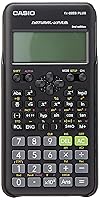
Casio Scientific Calculator
The right calculator makes study sessions faster and less frustrating.
We independently recommend products. We may earn a commission at no extra cost to you.
A solid option for students: the Casio fx-82AU PLUS II Calculator ($27.00, 4.7★ from 259 reviews) is worth a look. Affiliate link
FAQ
Frequently asked questions
What does independent events mean?
Two events are independent if the outcome of one does not affect the other. For example, flipping a coin and rolling a die are independent. P(A and B) = P(A) x P(B) for independent events.
What does mutually exclusive mean?
Mutually exclusive events cannot happen at the same time. For example, a coin landing heads and tails on the same flip. P(A and B) = 0 and P(A or B) = P(A) + P(B) for mutually exclusive events.
How do I calculate P(A or B)?
The addition rule: P(A or B) = P(A) + P(B) - P(A and B). For mutually exclusive events, this simplifies to P(A) + P(B) since P(A and B) = 0.
Related
Related calculators
Sample Size Calculator
Calculate the required sample size for a survey or experiment given confidence level, margin of error, and population size.
Open calculatorStandard Deviation Calculator
Calculate mean, median, mode, variance, and standard deviation from a data set.
Open calculatorPercentage Calculator
Calculate percentages three ways — X% of Y, X is what % of Y, and percentage change between two values.
Open calculatorQuadratic Equation Solver
Solve quadratic equations (ax^2 + bx + c = 0) for roots, discriminant, vertex, and axis of symmetry.
Open calculator