Science & Statistics
Scientific Notation Converter
Convert numbers between standard, scientific, and engineering notation.
How this calculator works
Parses the input number (handling standard, scientific, and engineering formats), then converts to all three representations. Determines the exponent by counting decimal place shifts needed to get a coefficient between 1 and 10 (scientific) or adjusts to the nearest multiple of 3 (engineering).
Enter in standard form, scientific notation (3.2e8), or with exponents
Our pick

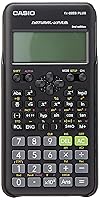
Casio Scientific Calculator
The right calculator makes study sessions faster and less frustrating.
We independently recommend products. We may earn a commission at no extra cost to you.
A solid option for students: the Casio fx-82AU PLUS II Calculator ($27.00, 4.7★ from 259 reviews) is worth a look. Affiliate link
FAQ
Frequently asked questions
What is scientific notation?
Scientific notation expresses numbers as a coefficient (1-9.99) multiplied by a power of 10. For example: 300,000 = 3 x 10^5 and 0.00045 = 4.5 x 10^-4. It makes very large or very small numbers easier to read and compare.
What is engineering notation?
Engineering notation is similar to scientific notation but the exponent is always a multiple of 3 (corresponding to SI prefixes like kilo, mega, giga, milli, micro, nano). For example: 45,000 = 45 x 10^3.
How do I type scientific notation?
Most calculators and programming languages use 'e' notation: 3.2e8 means 3.2 x 10^8. Negative exponents use e-: 4.5e-4 means 4.5 x 10^-4.
Related
Related calculators
Quadratic Equation Solver
Solve quadratic equations (ax^2 + bx + c = 0) for roots, discriminant, vertex, and axis of symmetry.
Open calculatorStandard Deviation Calculator
Calculate mean, median, mode, variance, and standard deviation from a data set.
Open calculatorPercentage Calculator
Calculate percentages three ways — X% of Y, X is what % of Y, and percentage change between two values.
Open calculatorProbability Calculator
Calculate combined probabilities for independent, dependent, and mutually exclusive events.
Open calculator