Science & Statistics
Sample Size Calculator
Calculate the required sample size for a survey or experiment given confidence level, margin of error, and population size.
How this calculator works
Uses Cochran's formula: n = (Z^2 * p * (1-p)) / E^2, adjusted for finite populations using n_adj = n / (1 + (n-1)/N). Z is the z-score for the confidence level (1.96 for 95%), p is the expected proportion, and E is the margin of error.
95% is standard for most research
+/- this percentage (5% is common)
Total number of people in the group you are studying. Leave large (100,000+) if unknown.
Expected response rate or split. Use 50% if unknown (maximises sample).
Our pick

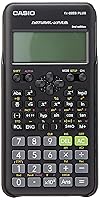
Casio Scientific Calculator
The right calculator makes study sessions faster and less frustrating.
We independently recommend products. We may earn a commission at no extra cost to you.
A solid option for students: the Casio fx-82AU PLUS II Calculator ($27.00, 4.7★ from 259 reviews) is worth a look. Affiliate link
FAQ
Frequently asked questions
What sample size do I need for a 95% confidence level?
For a 95% confidence level with +/-5% margin of error and 50% proportion: population of 1,000 needs 278 responses; 10,000 needs 370; 100,000 needs 383; 1 million+ needs 385. Larger populations barely change the required sample.
What confidence level should I use?
95% is the standard for most research and surveys. 90% is acceptable for preliminary research or quick polls. 99% is used in medical, pharmaceutical, and high-stakes research where errors are costly.
Does a larger sample always mean better results?
Yes, up to a point. A larger sample reduces the margin of error and increases precision. However, the benefit of each additional respondent diminishes — going from 100 to 200 respondents has a bigger impact than going from 1,000 to 1,100.
What is the margin of error?
The margin of error represents the range within which the true population value is expected to fall. If 60% of your sample says 'yes' with a +/-5% margin, the true value is likely between 55% and 65%.
Related
Related calculators
Standard Deviation Calculator
Calculate mean, median, mode, variance, and standard deviation from a data set.
Open calculatorProbability Calculator
Calculate combined probabilities for independent, dependent, and mutually exclusive events.
Open calculatorPercentage Calculator
Calculate percentages three ways — X% of Y, X is what % of Y, and percentage change between two values.
Open calculator